A recent incident in Austin has reignited debate over the role of autonomous vehicles in complex urban environments after a Waymo robotaxi temporarily blocked a street while emergency crews were responding to a deadly bar shooting.
While cities like San Francisco have grappled with robotaxi-related disruptions for years, Austin — widely regarded as one of the most autonomous vehicle-friendly cities in the United States — is now confronting similar concerns.
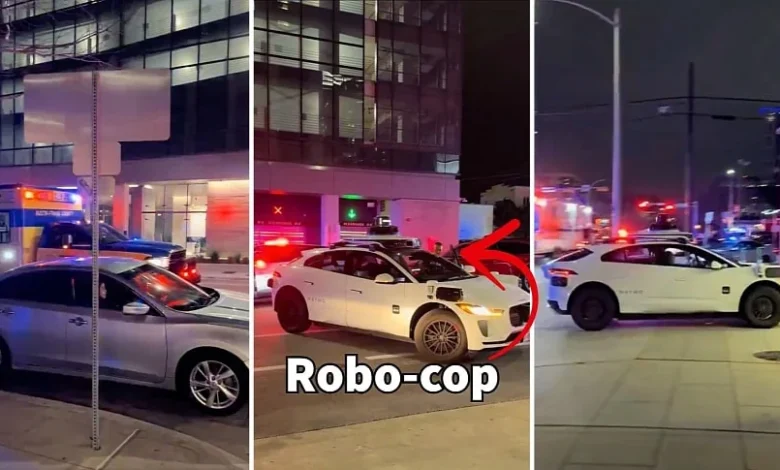
According to eyewitness videos circulating on social media, a Waymo robotaxi became stuck across both lanes of traffic while attempting to make a U-turn. The vehicle appeared unable to complete the maneuver, effectively blocking the roadway.
Under normal circumstances, such a delay might have been little more than an inconvenience. However, at the time of the incident, emergency responders were dealing with a mass shooting at a nearby bar. Authorities later confirmed multiple victims, with at least two fatalities and 14 people injured.
The stalled robotaxi reportedly obstructed access for an ambulance attempting to reach the scene.
Police Intervention Required
The situation was ultimately resolved after a police officer approached the vehicle and communicated with Waymo’s remote operators using the robotaxi’s external speaker system. After more than a minute, the vehicle cleared the roadway by driving into a nearby parking garage.
The incident was confirmed by an Austin-Travis County EMS spokesperson, who noted that the officer followed established procedures to address the blockage and was able to quickly move the vehicle so emergency units could proceed.
While emergency personnel were already heavily deployed in the area due to large weekend crowds, the episode raised serious questions about how autonomous vehicles handle unpredictable and high-stakes scenarios.
A Familiar Problem From San Francisco
For residents of San Francisco, scenes like this are nothing new.
Waymo and the now-defunct Cruise robotaxi fleets have faced sustained criticism in San Francisco for obstructing traffic, failing to yield to emergency vehicles, and occasionally interfering with police or fire response efforts.
City officials there have struggled to balance the innovation and economic benefits of autonomous driving technology with public safety concerns and operational shortcomings.
Now, Austin appears to be encountering similar growing pains.
Waymo’s Response
Waymo stated that the vehicle involved had been dispatched to pick up a rider in the aftermath of the shooting. According to the company, the robotaxi approached the designated pickup location, encountered emergency personnel, and immediately began executing a U-turn to clear the area.
Waymo added that a nearby officer assisted in managing the situation.
However, critics argue that the vehicle’s hesitation and inability to quickly adapt to the unfolding emergency exposed limitations in autonomous systems when navigating chaotic, real-world conditions.
Broader Concerns About Emergency Navigation
The Austin incident has fueled broader conversations about accountability standards and regulatory oversight for robotaxi operators.
Commenters on social media platforms, including Reddit, called for stricter rules governing autonomous vehicles operating on public streets — particularly when it comes to yielding to emergency responders.
Beyond this specific event, Waymo vehicles in Austin have recently faced criticism for allegedly passing school buses illegally. Combined with the shooting-related blockage, these incidents have intensified scrutiny.
Autonomous vehicles rely heavily on sensors, mapping data, and predefined behavioral protocols. While they can handle routine driving scenarios effectively, emergency scenes often present unpredictable variables: flashing lights, erratic pedestrian movement, road closures, and manual traffic direction by officers. These dynamic conditions remain among the most challenging scenarios for AI-driven systems.
The Bigger Picture for Austin
Austin has actively welcomed autonomous vehicle testing and deployment, positioning itself as a technology-forward city open to innovation. The latest incident, however, underscores the tension between rapid adoption and real-world readiness.
Unlike San Francisco — where residents have already voiced years of frustration — Austin is only beginning to confront the visible downsides of widespread robotaxi deployment.
The central question remains: can autonomous vehicles reliably interpret and respond to high-pressure emergency situations without human intervention?
For now, the Austin shooting incident serves as a reminder that even as robotaxi technology advances, human oversight — and sometimes direct intervention — remains essential.
As autonomous fleets expand into more U.S. cities, regulators, operators, and the public will likely demand clearer safety protocols to ensure that innovation does not come at the expense of emergency response effectiveness.