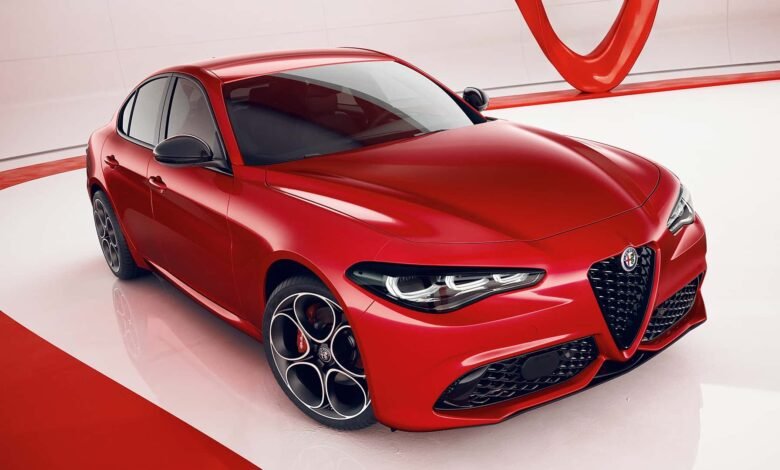
More than a decade after its debut, the Alfa Romeo Giulia continues to evolve, proving that good design and engineering can stand the test of time. Alongside its SUV sibling, the Alfa Romeo Stelvio, the Italian marque is introducing a new Performance Package to keep both models fresh as they approach the end of their lifecycle.
A few years ago, Alfa Romeo had committed to becoming an all-electric brand by 2027. However, shifting market demand—particularly the slower-than-expected adoption of EVs—prompted a strategic rethink. As a result, the next-generation Giulia and Stelvio, initially planned as fully electric models, have been delayed so they can also support internal combustion engines. This decision pushes their arrival further down the road, meaning current versions will remain on sale through at least 2027.
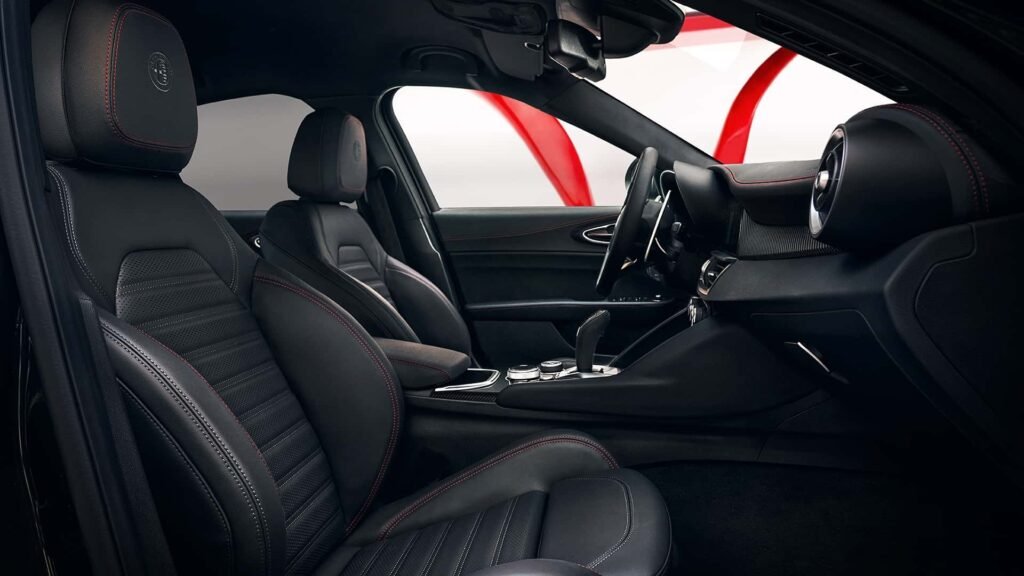
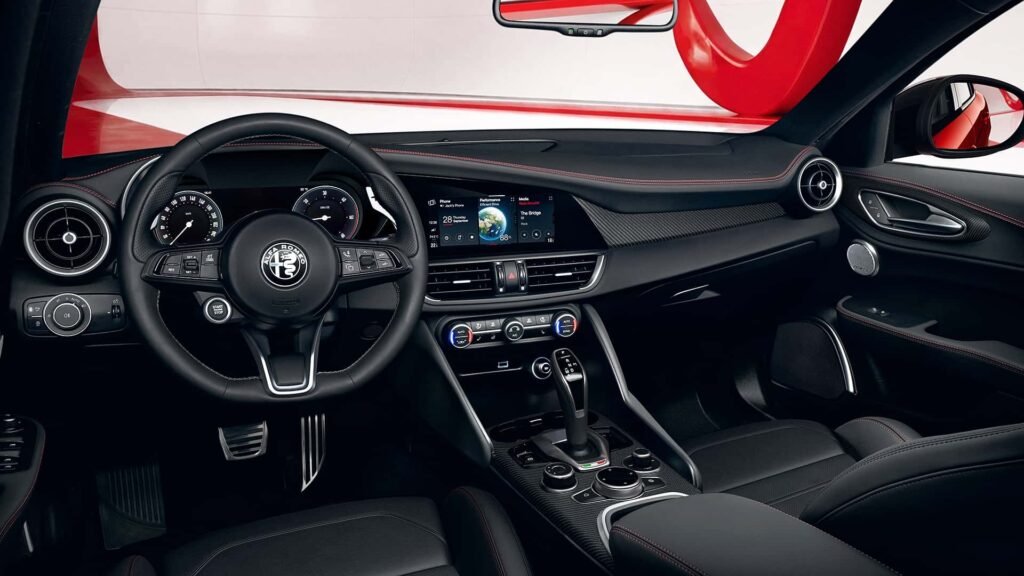
Rather than letting these aging models stagnate, Alfa Romeo is refining them. Both vehicles, built on the well-regarded Giorgio platform developed during the Sergio Marchionne era, now benefit from a new Performance Pack available in Europe. The highlight is a sophisticated Synaptic Dynamic Control suspension system, derived from the high-performance Quadrifoglio variants.
This advanced setup uses electro-hydraulic valves to continuously adjust the dampers in real time. Depending on the selected driving mode, it can deliver sharper handling with a firmer setup or prioritize comfort with a softer ride, offering drivers greater flexibility behind the wheel.
The package also enhances the cabin experience. While it doesn’t increase outright performance, it introduces black leather upholstery with striking red stitching, along with carbon-fiber trim across the dashboard, doors, and armrests. To round things off, a premium 900-watt Harman Kardon sound system with a subwoofer adds a richer audio experience.
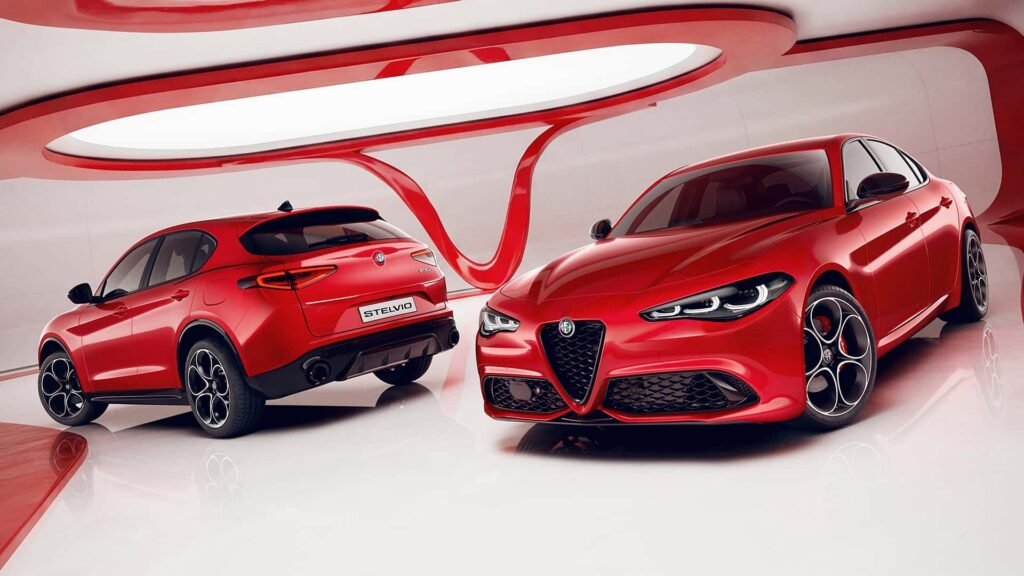
Despite their age—the Giulia dating back to 2015 and the Stelvio to 2016—both models remain compelling choices for driving enthusiasts. Their styling has aged gracefully, and their interiors offer a refreshing alternative to today’s screen-heavy designs, retaining physical controls that many drivers still prefer. There’s also an upside to their longevity: years on the market have allowed Alfa Romeo to address early reliability concerns, making these cars more sorted than ever.
In a segment constantly chasing the new, the Giulia and Stelvio show that sometimes, evolution beats reinvention.